World Hepatitis Day 2026: Liver Health Beyond Hepatitis
Beyond Hepatitis — Protecting the Liver Before Irreversible Damage Occurs | Liver Health, MASLD & Hepatoprotection
“The future of liver care lies in prevention, preservation, and proactive intervention.”
“Protecting the liver should begin long before symptoms appear—because prevention remains the most effective treatment.”
The Liver: The Silent Guardian of Human Health
Every year on July 28, World Hepatitis Day reminds us of the global burden of viral hepatitis and the importance of early diagnosis and prevention. While major advances have been made in managing hepatitis B and C, chronic liver disease is increasingly driven by metabolic dysfunction, obesity, diabetes, alcohol use, and drug-induced liver injury. Protecting liver health today requires looking beyond viral infections and focusing on early intervention before irreversible damage occurs.
“The future of hepatology lies in preventing liver damage, not just treating its complications.”
World Hepatitis Day: Looking Beyond Viral Hepatitis
Although hepatitis B and hepatitis C remain important causes of chronic liver disease, MASLD (Metabolic Dysfunction-Associated Steatotic Liver Disease) has emerged as one of the fastest-growing liver disorders worldwide. Combined with alcohol-related liver disease and metabolic syndrome, it represents a major contributor to liver fibrosis and cirrhosis. This changing landscape highlights the need for a comprehensive approach that addresses both infectious and metabolic causes of liver injury.
“Protecting the liver early offers the best opportunity to prevent fibrosis and preserve hepatic function.”
The Liver – An Organ That Suffers in Silence
The liver possesses an extraordinary regenerative capacity and a substantial functional reserve, allowing significant injury to remain clinically silent for years. Unlike many organs, it can continue to perform its essential metabolic, synthetic, and detoxification functions despite ongoing inflammation and structural damage. Consequently, many patients with chronic liver disease remain asymptomatic until fibrosis has progressed to an advanced stage. This silent nature underscores the importance of early screening, timely diagnosis, and proactive management in individuals at risk.
“Early detection offers the greatest opportunity to halt disease progression before irreversible fibrosis develops.”
The Changing Face of Chronic Liver Disease
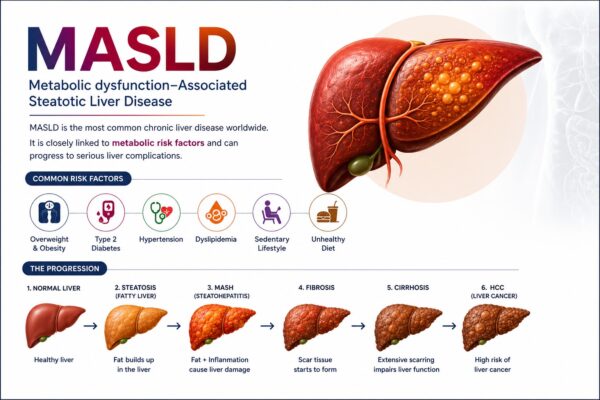
The epidemiology of chronic liver disease has changed dramatically over the last decade. While viral hepatitis remains a major concern, MASLD, obesity, type 2 diabetes, dyslipidemia, excessive alcohol consumption, and drug-induced liver injury are now among the leading contributors to chronic hepatic damage. The coexistence of multiple metabolic risk factors further accelerates disease progression, making comprehensive risk assessment an essential part of routine clinical practice.
“Today’s liver disease is increasingly driven by metabolic dysfunction rather than viral infection alone.”
“Addressing metabolic health is fundamental to protecting long-term liver function.”
Oxidative Stress: The Common Driver of Liver Injury
Despite their diverse causes, most chronic liver diseases share common pathogenic mechanisms. Persistent oxidative stress, mitochondrial dysfunction, and chronic inflammation promote hepatocyte injury and activate hepatic stellate cells, initiating collagen deposition and progressive fibrosis. Growing evidence suggests that reducing oxidative stress may help preserve hepatocyte integrity and slow the progression of chronic liver disease.
“Oxidative stress is a central mechanism linking inflammation to liver fibrosis.”
From Steatosis to Fibrosis: A Progressive Disease Continuum
Chronic liver disease follows a gradual but progressive course. Hepatic steatosis may advance to steatohepatitis, fibrosis, cirrhosis, and ultimately hepatocellular carcinoma if the underlying insult persists. Importantly, the early stages remain potentially reversible through timely intervention, lifestyle modification, and appropriate medical management. Preventing progression before irreversible architectural changes occur remains one of the primary goals of contemporary hepatology.
“Fibrosis is a progressive process—but timely intervention can change its course.”
Redefining Liver Care: The Importance of Early Hepatoprotection
The management of chronic liver disease is undergoing a significant transformation. Contemporary hepatology is no longer focused solely on treating cirrhosis or end-stage liver failure but increasingly emphasizes preserving hepatocyte function during the earliest stages of disease. Early identification of at-risk individuals, aggressive management of metabolic risk factors, and strategies aimed at reducing oxidative stress and chronic inflammation are now recognized as essential components of comprehensive liver care. Such an approach not only slows disease progression but also improves long-term hepatic and metabolic outcomes.
Evidence-Based Nutritional Support in Liver Health
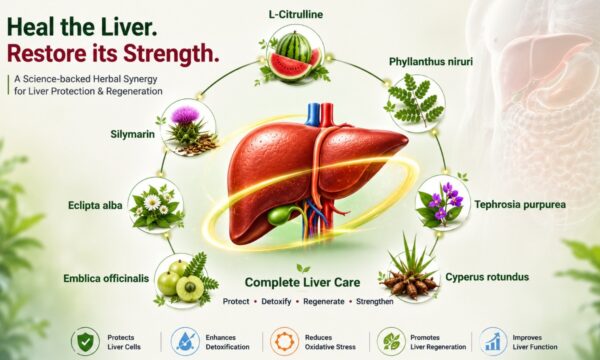
Growing scientific evidence has highlighted the role of nutraceuticals and plant-derived bioactive compounds as complementary strategies for supporting liver health. Ingredients such as Silymarin, Phyllanthus niruri, Eclipta alba, Emblica officinalis, and amino acid derivatives like L-Citrulline have demonstrated antioxidant, anti-inflammatory, and hepatoprotective properties in preclinical and clinical studies. Although these interventions are not substitutes for disease-specific medical therapy, they may help support hepatocyte integrity, reduce oxidative stress, and contribute to maintaining normal liver function when incorporated into an evidence-based treatment plan.
“Supporting hepatocyte resilience requires addressing oxidative stress, inflammation, and metabolic dysfunction together.”
Looking Ahead: Protecting the Liver Before Irreversible Damage Occurs
As the global burden of chronic liver disease continues to evolve, physicians must broaden their approach from managing viral hepatitis alone to protecting the liver against all forms of chronic injury. Whether liver damage arises from metabolic dysfunction, alcohol, medications, environmental toxins, or viral infection, the ultimate objective remains the same: preserving hepatocyte function, preventing fibrosis, and maintaining long-term liver health. On this World Hepatitis Day, the focus should extend beyond disease awareness toward promoting proactive liver care through early diagnosis, lifestyle modification, metabolic risk reduction, and evidence-based hepatoprotective strategies.
“The future of liver care lies in prevention, preservation, and proactive intervention.”
Key Take-Home Message
The liver has an extraordinary ability to regenerate, yet chronic injury often progresses silently until significant damage has occurred. While viral hepatitis remains an important global health concern, the rapid rise of MASLD, obesity, diabetes, alcohol-related liver disease, and drug-induced liver injury has reshaped the landscape of hepatology. Early diagnosis, risk-factor modification, and scientifically supported hepatoprotective strategies are central to preserving liver function and reducing the burden of chronic liver disease. Protecting the liver should begin long before symptoms appear—because prevention remains the most effective treatment.