Beyond Histamine: Rethinking Allergy Through the Gut–Immune–Brain–Skin Axis
The New Biology of Allergic Disease
Introduction
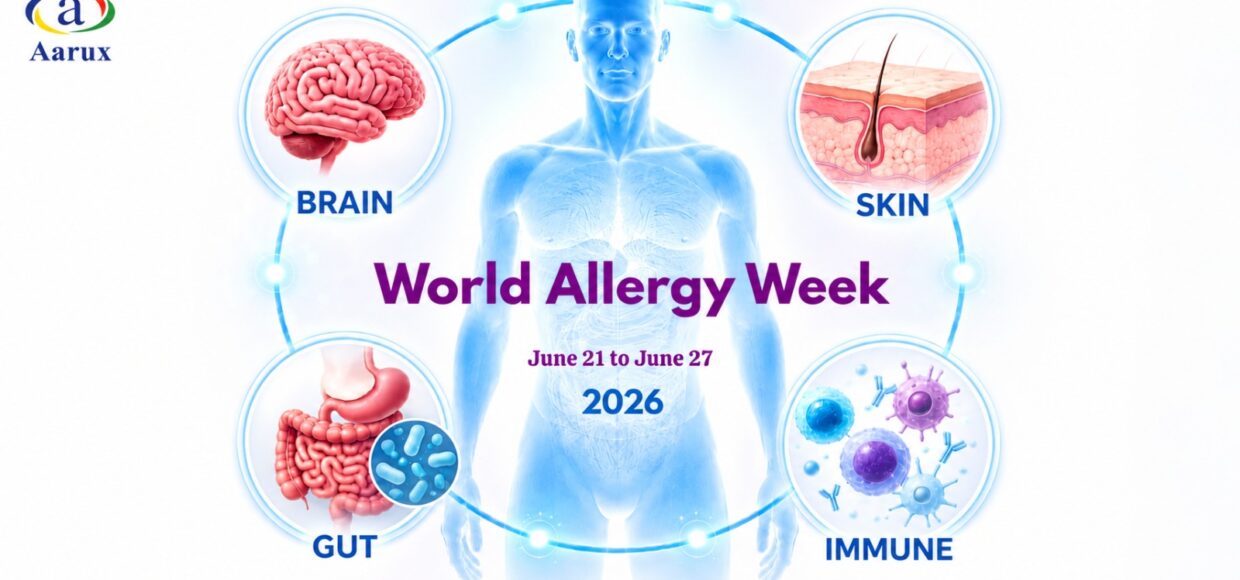
For decades, allergy has been viewed as an IgE-mediated, histamine-driven disease. While antihistamines and corticosteroids effectively relieve symptoms, they do not explain why allergic diseases continue to rise worldwide. Advances in immunology, microbiome science, and neuroimmunology now suggest that allergy is more than a histamine-mediated reaction. Instead, it is increasingly recognized as a disorder of immune dysregulation involving the gut, immune system, brain, and skin—the Gut–Immune–Brain–Skin Axis.
Allergic diseases are increasingly recognized as disorders of immune dysregulation involving the Gut–Immune–Brain–Skin Axis. While histamine drives symptoms, gut microbiome balance, epithelial barrier integrity, immune tolerance, and neuroimmune interactions may influence why allergic responses develop in the first place.
As the theme of World Allergy Week 2026 reminds us, “Allergy Care Is Essential Care,” effective allergy management should extend beyond symptom relief to addressing the underlying biological mechanisms that influence immune health and long-term disease outcomes.
Why Are Allergies Becoming More Common?
Allergic diseases have risen markedly over recent decades, affecting both children and adults. Because human genetics have changed little during this period, environmental and lifestyle factors are thought to be the main contributors. Pollution, urbanization, processed diets, antibiotic overuse, reduced microbial exposure, chronic stress, and poor sleep may impair immune tolerance, increasing susceptibility to allergic diseases.
The question is no longer “What triggered the allergy?” but “What altered the immune system enough to overreact?”
The Gut: The Foundation of Immune Tolerance
One of the biggest breakthroughs in allergy research is recognizing that the gut is more than a digestive organ. It contains the body’s largest immune compartment, where immune tolerance is established. A healthy gut microbiome helps the immune system distinguish harmless substances from genuine threats, preventing unnecessary allergic responses.
The intestinal barrier works alongside the microbiome as the first line of immune defense. It allows nutrients to enter the bloodstream while preventing allergens, toxins, and harmful microbes from crossing into the body. However, factors such as processed diets, pollution, excessive antibiotic use, chronic stress, and poor sleep can disrupt the gut microbiome and impair barrier integrity. This may promote inappropriate immune activation and allergic sensitization.
Growing evidence links gut dysbiosis and epithelial barrier dysfunction with allergic rhinitis, asthma, atopic dermatitis, food allergy, and chronic urticaria, suggesting that allergic diseases may begin long before clinical symptoms appear. Restoring gut microbial balance and barrier function is therefore emerging as an important strategy in allergy management.
The gut is home to the body’s largest immune compartment, where immune tolerance is established. A healthy microbiome and intact intestinal barrier help regulate immune responses, while dysbiosis and barrier dysfunction have been associated with allergic rhinitis, asthma, atopic dermatitis, food allergy, and chronic urticaria.
Small Molecules, Major Influence
Another exciting area of research involves short-chain fatty acids (SCFAs), beneficial metabolites produced when gut bacteria ferment dietary fiber.
SCFAs help maintain the intestinal barrier, promote Regulatory T cells (Tregs), suppress excessive Type-2 inflammation, and support immune tolerance. Reduced SCFA production has been associated with a greater risk of allergic diseases, highlighting the importance of a healthy microbiome in long-term immune regulation.
Histamine may produce the symptoms—but the biological events that determine whether those symptoms occur often begin much earlier, within the gut.
The Gut–Brain–Skin Axis: Where Allergy Becomes a Systemic Disease
The gut does not function in isolation. It constantly communicates with the brain, immune system, and skin through a complex network of immune cells, microbial metabolites, hormones, and neural pathways. This interconnected communication—known as the Gut–Brain–Skin Axis—is now reshaping our understanding of allergic disease.
Emerging evidence suggests that allergy is not confined to one organ—it reflects a disturbance across an interconnected biological network.
When Stress Triggers Allergy
Many patients notice that their allergies worsen during periods of stress, anxiety, sleep deprivation, or emotional exhaustion. Recent neuroimmunology research provides a scientific explanation for this observation.
Stress activates the hypothalamic–pituitary–adrenal (HPA) axis and the sympathetic nervous system, leading to the release of cortisol and inflammatory mediators. Persistent stress can alter gut microbial composition, weaken epithelial barriers, and amplify immune responses, making individuals more susceptible to allergic flare-ups.
Rather than being purely psychological, stress is now recognized as an important biological modifier of allergic disease.
The Skin Reflects What’s Happening Within
The skin is another key player in this interconnected axis. Conditions such as atopic dermatitis, chronic urticaria, and eczema are increasingly linked with alterations in both the gut microbiome and systemic immune function.
Recent studies indicate that microbial metabolites produced in the intestine influence skin barrier integrity and inflammatory pathways. At the same time, chronic skin inflammation can further activate systemic immune responses, creating a cycle of persistent inflammation.
This explains why allergic disorders affecting the skin, airways, and gastrointestinal tract often coexist and share similar immune mechanisms.
Moving Beyond Histamine
Histamine remains an important mediator of allergy and an effective therapeutic target for symptom relief. However, current research suggests that histamine is the endpoint of the allergic cascade—not its origin.
Scientists are now focusing on the upstream factors that determine whether an allergic response develops, including:
- Healthy gut microbiome diversity
- Intact epithelial barrier function
- Balanced immune regulation (Treg–Th2 balance)
- Reduced chronic inflammation
- Restoration of immune tolerance
The future of allergy management lies not only in blocking histamine, but in restoring the biological systems that prevent inappropriate immune responses.
A New Direction for Allergy Care
This evolving understanding is changing the clinical approach to allergic disease. Alongside conventional therapies, greater emphasis is being placed on supporting gut health, epithelial barrier integrity, nutrition, and stress management. Rather than replacing conventional treatments, these strategies aim to complement them by addressing the underlying biology of allergy. The focus is gradually shifting from symptom control to supporting long-term immune balance.
The Future of Allergy Management
The growing understanding of the Gut–Immune–Brain–Skin Axis marks a significant shift in allergy research. Instead of viewing allergy as an isolated IgE-histamine reaction, it is increasingly recognized as a disorder involving immune imbalance, epithelial barrier dysfunction, microbiome alterations, and neuroimmune interactions.
This evolving perspective is driving interest in therapies that not only relieve symptoms but also support the body’s natural mechanisms of immune tolerance. Future allergy management is therefore expected to integrate conventional pharmacotherapy with microbiome-focused and immune-supportive strategies, offering a more comprehensive approach to long-term care.
The goal is no longer just to suppress allergic symptoms—but to restore the immune balance that prevents them.
Clinical Takeaways
As allergy science continues to evolve, a few key principles are becoming increasingly important:
- Histamine is a key mediator—but not the sole driver of allergic disease.
- The gut microbiome plays a central role in immune education and IgE regulation.
- A healthy epithelial barrier helps prevent allergen sensitization.
- Stress and the Gut–Brain–Skin Axis can influence the severity and recurrence of allergies.
- Supporting immune tolerance may complement conventional allergy management.
Together, these insights are redefining how clinicians understand and approach allergic disorders.
The Emerging Role of Probiotics as Nutraceuticals in Allergy Care
Growing evidence highlights probiotics as a promising nutraceutical approach in allergy management. By modulating the gut microbiome, selected probiotic strains help support immune balance and promote immune tolerance. Clinically studied strains such as Lacticaseibacillus rhamnosus GG (LGG), Lacticaseibacillus paracasei, Limosilactobacillus fermentum, Bifidobacterium longum, and Bifidobacterium lactis have demonstrated immunomodulatory properties.
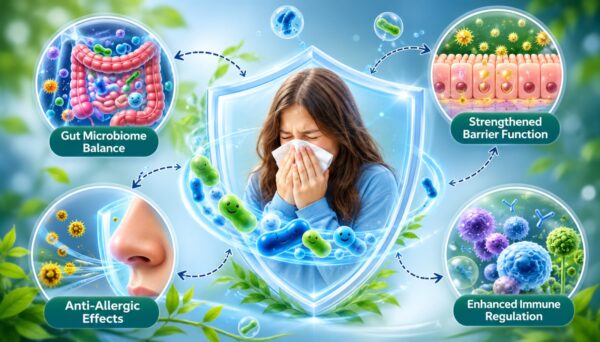
These probiotics may help restore microbial balance, strengthen epithelial barrier function, enhance Regulatory T-cell (Treg) activity, and promote balanced immune responses, potentially reducing the severity and recurrence of allergic conditions. While strain-specific research continues, probiotics are increasingly recognized as an evidence-based nutraceutical adjunct to conventional allergy care.
The future of allergy management extends beyond symptom relief by integrating conventional therapies with evidence-based strategies that support gut health, epithelial barrier function, immune tolerance, and microbiome balance. Probiotics are emerging as promising nutraceutical adjuncts that may complement long-term allergy care.
Conclusion
The future of allergy care extends beyond histamine. Emerging evidence suggests that allergic diseases result from complex interactions between the gut microbiome, epithelial barriers, immune system, brain, and skin. As we observe World Allergy Week, the message “Allergy Care Is Essential Care” reinforces the importance of adopting a broader, science-driven approach that combines effective symptom control with evidence-based nutraceutical strategies.
By supporting gut health and immune balance, probiotics represent a promising partner in comprehensive allergy management, helping redefine allergy care beyond histamine and contributing to a more preventive, patient-centered approach.