Is Summer a Real Battle for People with Varicose Veins?
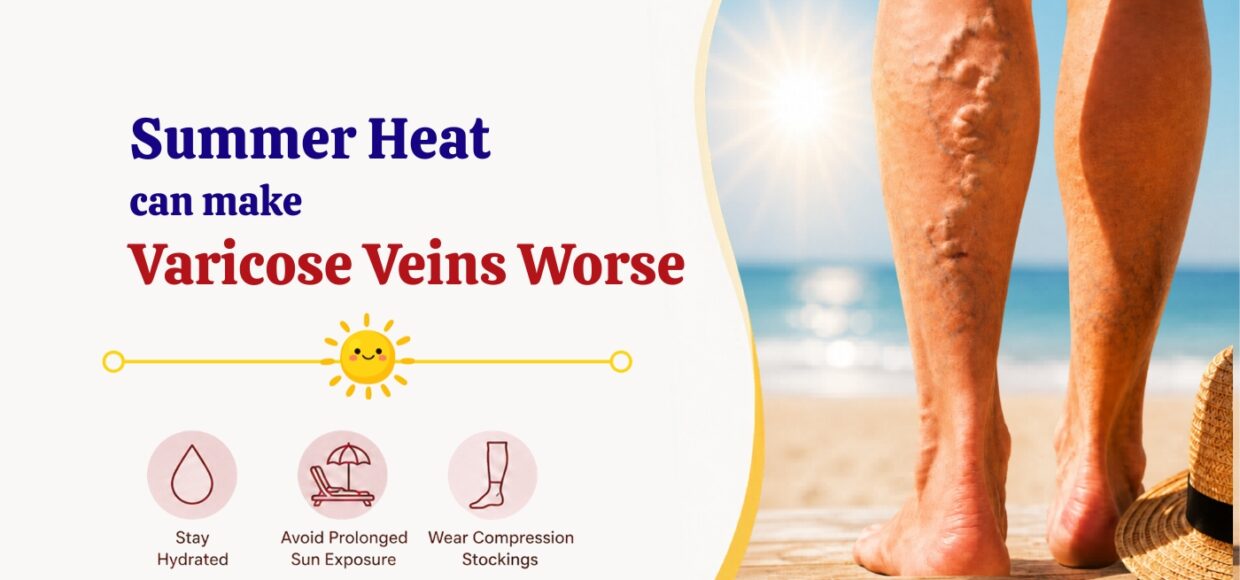
Heat, swelling, poor circulation, and leg discomfort can significantly worsen during summer in people suffering from varicose veins
Understanding Varicose Veins
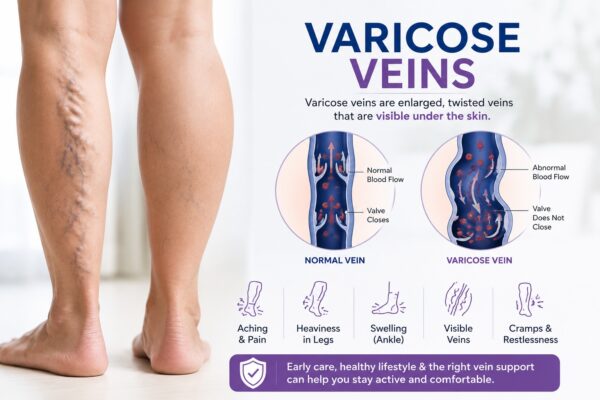
Varicose veins are enlarged, twisted, and visibly swollen veins caused by improper blood circulation inside the veins. Normally, small one-way venous valves help blood flow upward toward the heart and prevent backward flow.
When these valves weaken or become damaged, blood starts pooling inside the veins, increasing pressure and causing the veins to enlarge and become visible under the skin.
Visible varicose veins in the lower limbs are estimated to affect nearly one-third of the population.
“Weak venous valves and poor circulation are the major reasons behind varicose vein development and progression.”
Who Is Commonly Affected by Varicose Veins?
Varicose veins can affect both men and women, especially:
- Women above 50 years, particularly during menopause
- People with multiple pregnancies
- Men, who account for nearly 45% of cases
- Individuals who stand or sit for prolonged periods such as nurses, teachers, drivers, and office workers
- People with heart, kidney, or lung disorders
- Individuals who are overweight or physically inactive
Summer and Varicose Veins: Why Symptoms Worsen
During hot weather, the body naturally widens blood vessels to release heat — a process called vasodilation.
In people with varicose veins, this heat-induced expansion further weakens circulation and makes it harder for blood to travel back toward the heart. As a result, blood tends to pool in the lower limbs, increasing swelling and discomfort.
“Summer heat can worsen blood pooling inside already weakened veins, leading to heaviness, swelling, and leg pain.”
Common Summer Symptoms of Varicose Veins
People with varicose veins may experience:
- Increased leg swelling, especially around the ankles
- Heaviness and tiredness in the legs
- Aching, throbbing, or cramping pain
- Itching and tightness in the affected area
- Symptoms worsening after prolonged standing or sitting
Tips to Manage Varicose Veins During Summer
Simple lifestyle measures can help improve circulation and reduce discomfort during hot days:
- Stay well hydrated
- Avoid prolonged standing or sitting
- Elevate the legs whenever possible
- Use compression therapy if advised by healthcare professionals
- Stay physically active with regular walking
- Avoid excessive heat exposure and very hot baths
“Early lifestyle management and proper vein support may help reduce summer-related varicose vein discomfort.”
Powerful Nutraceutical Supplements for Vein Health Support
Certain nutraceutical supplements may help support circulation, strengthen blood vessels, and reduce discomfort associated with varicose veins.
Horse Chestnut Extract
Helps reduce leg swelling, heaviness, and discomfort associated with poor venous circulation.
Pine Bark Extract
Supports healthy blood flow and provides antioxidant protection to blood vessels.
MPFF (Diosmin & Hesperidin)
Helps improve venous tone and may reduce symptoms like edema, pain, and leg heaviness.
Rutin
A bioflavonoid that helps strengthen blood vessels, improve capillary health, and reduce swelling and leg fatigue.
Final Thoughts
Summer can indeed feel challenging for people with varicose veins. Heat exposure increases vein dilation and blood pooling, which may worsen swelling, heaviness, and pain.
Early care, lifestyle modifications, proper circulation support, and scientifically backed Nutraceutical supplements may help improve vein comfort and overall vascular health.
Nourish Your Veins This Summer with Powerful Nutraceutical Support — As Recommended by Healthcare Professionals!
Reference:
How to Cope up with Varicose veins