FROM PCOS TO PMOS: UNDERSTANDING THE METABOLIC SHIFT IN WOMEN’S HEALTH
FROM PCOS TO PMOS – WHY THE NAME CHANGE MATTERS
Overview:
An educational overview of the transition from PCOS to PMOS, highlighting the role of insulin resistance, metabolic dysfunction, hormonal imbalance, obesity, hair loss, acne, and women’s metabolic health in modern scientific understanding.
For decades, millions of women worldwide were diagnosed with Polycystic Ovary Syndrome (PCOS), a condition traditionally associated with irregular menstrual cycles, infertility, and ovarian dysfunction.
However, scientific understanding of the condition has evolved significantly over the years.
Researchers now recognize that the disorder extends far beyond the ovaries and involves endocrine dysfunction, metabolic abnormalities, insulin resistance, chronic inflammation, and long-term cardiometabolic risk.
Because of this evolving scientific evidence, a global international consensus published in The Lancet in 2026 proposed a new terminology:
Polyendocrine Metabolic Ovarian Syndrome (PMOS)
The updated terminology reflects the true multisystem nature of the condition involving:
- Endocrine dysfunction
- Metabolic imbalance
- Insulin resistance
- Ovarian dysfunction
- Hair and skin manifestations
- Chronic inflammation
“PMOS reflects a broader scientific understanding that the condition involves endocrine, metabolic, and ovarian dysfunction rather than being limited to ovarian cysts alone.”
This shift represents a major advancement in understanding women’s metabolic health.
Why Was the Name Changed?
The older term “PCOS” was considered scientifically incomplete and potentially misleading.
Many women diagnosed with the condition do not actually have ovarian cysts. Instead, the condition is now understood to involve disrupted hormonal signaling, abnormal follicular development, insulin resistance, and metabolic dysfunction.
Scientific experts also recognized that the reproductive-only focus of the term often resulted in:
- Delayed diagnosis
- Poor disease awareness
- Underestimation of metabolic risk
- Fragmented treatment approaches
Research now shows that insulin resistance, obesity, androgen excess, and chronic low-grade inflammation are major contributors to disease progression.
The PMOS terminology therefore better represents:
- Polyendocrine hormonal disturbances
- Metabolic abnormalities
- Ovarian dysfunction
- Systemic health implications
The goal of this terminology shift is to improve:
- Disease awareness
- Diagnostic clarity
- Long-term metabolic management
- Patient understanding
Insulin Resistance: The Hidden Driver Behind PMOS
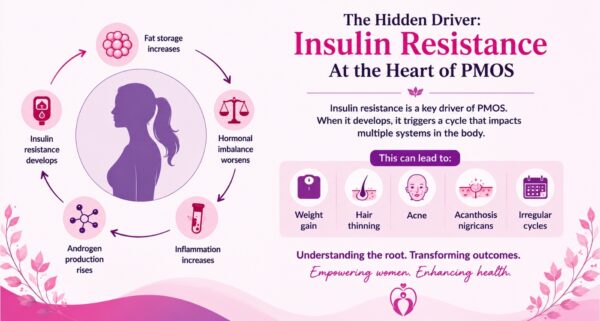
One of the most important scientific findings in recent years is the recognition that insulin resistance is a key driver of PMOS.
When the body becomes resistant to insulin, higher insulin levels are produced to maintain glucose balance. This excess insulin may:
- Stimulate androgen production
- Increase fat storage
- Worsen inflammation
- Disrupt ovulation
- Intensify hormonal imbalance
This metabolic-hormonal interaction contributes to several common manifestations associated with PMOS.
Common Manifestations Associated with PMOS
Weight Gain and Central Obesity
Many women with PMOS experience:
- Increased abdominal fat accumulation
- Difficulty losing weight
- Increased cravings
- Reduced metabolic flexibility
Obesity may further worsen insulin resistance and inflammation, creating a vicious metabolic cycle.
Hair Thinning and Hair Loss
Elevated androgen levels may contribute to:
- Hair follicle miniaturization
- Increased hair shedding
- Reduced hair density
- Progressive hair thinning
Hair loss is therefore increasingly recognized as a visible hormonal manifestation of PMOS.
Acne and Skin Changes
Excess androgen activity may stimulate sebaceous gland activity, contributing to:
- Oily skin
- Acne flare-ups
- Inflammatory skin changes
Acanthosis Nigricans
Acanthosis nigricans commonly appears as:
- Darkened neck folds
- Velvety skin pigmentation
- Underarm discoloration
Scientific literature recognizes it as a visible marker associated with:
- Hyperinsulinemia
- Insulin resistance
- Metabolic dysfunction
A New Era in Women’s Metabolic Health
The transition from PCOS to PMOS represents more than a simple name change.
It reflects a major scientific shift in understanding women’s health — recognizing the condition as a complex metabolic and endocrine syndrome rather than only an ovarian disorder.
“Improving insulin sensitivity and addressing metabolic health are becoming central pillars in the modern management of PMOS.”
Modern management approaches are therefore increasingly focused on:
- Improving insulin sensitivity
- Supporting metabolic wellness
- Managing body weight
- Reducing oxidative stress
- Supporting hormonal balance
- Addressing hair and skin manifestations
As scientific understanding continues to evolve, the PMOS framework is expected to improve awareness, earlier diagnosis, multidisciplinary care, and long-term health outcomes for women worldwide.