Osteoporosis Is No Longer Just an Age Problem
Why Bone Weakness Is Increasing Earlier Than Ever
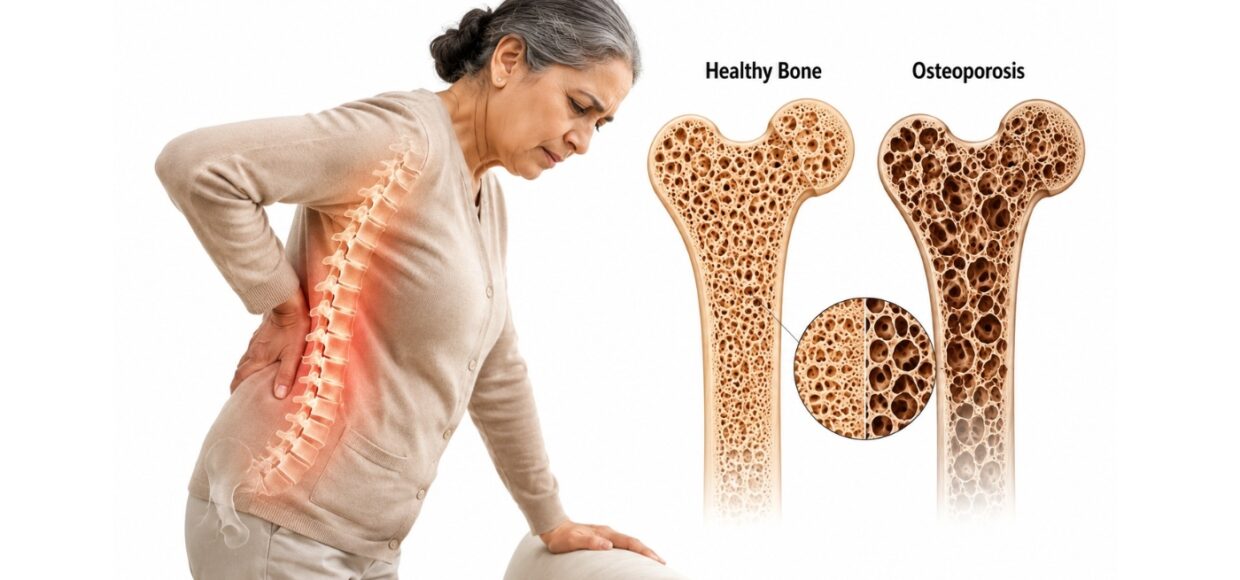
Weak bones are no longer limited to old age. Today, osteoporosis, low bone mineral density, and early bone weakness are increasingly seen in working professionals, post-menopausal women, sedentary adults, undernourished individuals, and even younger people with poor lifestyle habits.
Back pain. Knee weakness. Reduced flexibility. Difficulty climbing stairs. Loss of posture. Frequent body pain.
Many people ignore these as normal aging signs. But these may actually be early warning signs of declining bone strength and skeletal health.
“Modern lifestyle is silently weakening bones long before symptoms become visible.”
The Growing Bone Health Concern
Osteoporosis is becoming one of the fastest-growing skeletal health concerns worldwide. Sedentary lifestyle, nutritional deficiencies, low physical activity, hormonal imbalance, poor sun exposure, chronic inflammation, and poor dietary habits are contributing to earlier bone weakness.
Modern lifestyles often lack:
- Adequate calcium-rich nutrition
- Vitamin D exposure
- Weight-bearing exercise
- Proper protein intake
- Bone-supportive micronutrients
As a result, many individuals develop reduced bone mineral density (BMD) much earlier than expected.
“Osteoporosis begins silently years before the first fracture appears.”
Bone loss usually progresses through stages:
- Normal Bone Density
- Osteopenia → Early bone thinning
- Osteoporosis → Severe bone weakness and fracture risk
Why Bone Strength Matters
Bone Mineral Density (BMD) reflects the strength and mineral content of bones. Healthy bones support posture, mobility, flexibility, balance, and fracture resistance.
When bone density reduces, bones gradually become fragile and structural stability weakens.
Strong bones are essential for:
- Healthy aging
- Joint support
- Mobility and movement
- Spine stability
- Muscle coordination
- Fall and fracture prevention
“Healthy bones need both mineral strength and structural support.”
Cissus quadrangularis: Traditional Bone Support with Modern Relevance
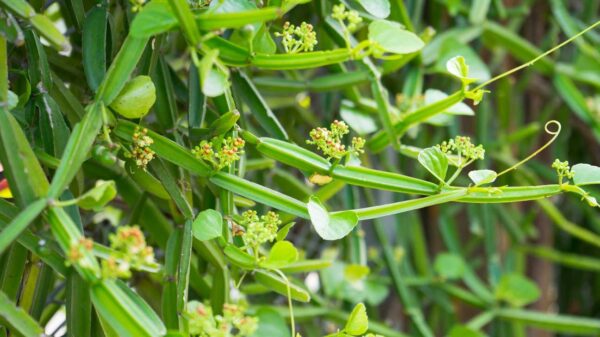
Widely known as Hadjod or Asthisamharaka, Cissus quadrangularis has traditionally been used in bone healing and musculoskeletal wellness. In recent years, growing scientific interest has focused on its possible role in supporting:
- Osteoblast activity
- Bone remodeling
- Collagen matrix formation
- Connective tissue integrity
- Joint and musculoskeletal support
One of the most important concepts in modern bone health nutrition is the role of the collagen scaffolding framework.
Before minerals strengthen bones, the body requires a healthy structural framework where mineral deposition can occur effectively. When this framework weakens, bone stability and strength may gradually decline.
“Bone strength depends not only on minerals, but also on the quality of the supporting framework.”
This is one of the reasons why Cissus quadrangularis is gaining attention in osteoporosis support, osteoarthritis nutrition, and bone healing discussions.
Coral Calcium & Vitamin D: Important Partners in Bone Health
Coral Calcium is a naturally derived marine calcium source known for its mineral-rich composition and skeletal wellness support. It may help support:
- Bone mineralization
- Bone density maintenance
- Skeletal stability
- Healthy calcium balance
However, calcium utilization largely depends on adequate Vitamin D levels.
Vitamin D plays a central role in:
- Calcium absorption
- Mineral utilization
- Muscle support
- Bone metabolism
- Overall musculoskeletal function
Without sufficient Vitamin D availability, even adequate calcium intake may not fully support optimal bone strength.
“Calcium support becomes more effective when absorption and utilization are properly maintained.”
Why Combining Cissus quadrangularis + Coral Calcium + Vitamin D Makes Sense
Modern bone care is no longer focused only on calcium replacement. Current understanding increasingly emphasizes the importance of supporting both bone density and bone architecture together.
While Coral Calcium helps support mineralization, Cissus quadrangularis may contribute toward collagen framework and connective tissue integrity. Vitamin D further supports calcium absorption and skeletal utilization, making the overall nutritional approach more comprehensive.
Together, this combination may help support:
- Bone density
- Structural stability
- Connective tissue strength
- Joint flexibility
- Mobility and posture
- Long-term skeletal wellness
“Modern bone nutrition focuses on both skeletal strength and structural integrity.”
How Long Does Bone Strengthening Take?
Bone remodeling is naturally a gradual biological process. Nutritional support may begin within weeks, but measurable improvement in bone density and skeletal resilience often requires several months depending on:
- Age
- Nutritional status
- Hormonal balance
- Physical activity
- Consistency of supplementation
- Lifestyle habits
For optimal bone wellness, nutritional support should ideally be combined with:
- Regular exercise
- Sunlight exposure
- Protein-rich diet
- Weight-bearing activity
- Healthy sleep patterns
“Bone strengthening requires continuous long-term nutritional support along with healthy lifestyle practices.”
Conclusion
Osteoporosis is a progressive skeletal condition that affects bone strength, mobility, posture, and quality of life.
Modern lifestyle habits are accelerating bone weakness much earlier than before, making preventive bone care increasingly important.
“Strong bones require more than calcium alone — they require structural support and continuous remodeling.”
Ingredients such as Cissus quadrangularis, Coral Calcium, and Vitamin D are gaining attention for supporting:
- Bone mineralization
- Collagen scaffolding
- Skeletal strength
- Connective tissue integrity
- Long-term musculoskeletal wellness
When combined with proper nutrition, exercise, and healthy lifestyle practices, they may help support stronger bones, better mobility, improved posture, and healthy aging.